
I still remember that quiet moment as I stepped through the split gateway of Pura Tirta Empul near Ubud. The gentle hum of chanting, the shimmer of holy spring water and the colourful offerings at every step, all of this reminded me that I was entering a sacred world, not just ticking off another photo-spot on my Bali itinerary. And if you’re planning a visit to Bali’s temples, this is more than just sightseeing, it's participating in a living tradition.
Arrival and Mindset
My day began early, just after sunrise, when the light was soft and the crowds thin. At Tirta Empul I joined a few locals patiently preparing offerings (canang) before entering the purification pools. A gentle breeze rustled through the palm-trees, and for a moment the world felt slowed down. I had booked a driver from the south of Bali so I could reach the temple comfortably and without stress.
What struck me first were the rules: cover your shoulders and knees, don a sarong and sash, remove your shoes, move quietly. For example, at Tirta Empul you’ll often find that the sarong and sash are included or available for rent right at the entrance. The local signs were clear: this is a place of worship. One tourist family was famously turned away from Pura Besakih for ignoring these dress codes. So I tucked away my beachwear for the moment, pulled on a borrowed sarong and sash, and entered with respectful silence.
What to Wear and How to Behave
Let’s break it down, because it’s easy to overlook these details until you’re standing at the gate and someone hands you a sarong (or asks you to go back).
- Cover your shoulders and legs. Both men and women should wear clothes that reach at least to the knee and modest tops.
- Wear a sarong and sash inside the temple complex. At Tirta Empul, for instance, the sarong is provided or rented at the entrance.
- Remove your shoes before entering certain inner courtyards.
- Be mindful of your feet! Don’t point them toward shrines; sit cross-legged or kneel in a way that your feet face away from sacred objects.
- Lower your voice. Don’t treat the temple like a playground. Photography is allowed, but sensitively: avoid snapping people mid-ritual, avoid flash, and don’t block their path.
- For places with purification pools (like Tirta Empul’s Melukat ritual), you’ll need a wet sarong for the water (often green), then change back into dry attire. Soap/shampoo is a no-go. Women who are menstruating are asked to refrain from entering certain sacred spaces or pools.
Here’s a real-time example from my morning at Tirta Empul: I witnessed a Balinese family guiding their grandmother into the water spouts, each taking turns under the fresh spring jets. Nearby, another visitor, well-intentioned but seated with bare feet pointed toward the altar was gently reminded by a guard to reposition. The moment felt guided, not shamed, and I appreciated that subtle cultural coaching.
Sacred Sites, Sacred Moments
On another excursion, I visited the majestic Besakih Temple, often called the “Mother Temple” of Bali. Perched on the slopes of Mount Agung, this complex of 23 temples is powerful, serene and deeply meaningful. I happened to be there during a full-moon month of the Balinese calendar when a major ceremony took place, pibitan mass offerings, gamelan music in the courtyards, locals in white congregating. The energy was intense, even though I wasn’t a participant. Around this period you’ll find that access is still allowed for visitors, but expect larger crowds, more ritual activity, and possibly restrictions on certain areas. It made me extra grateful that I had arranged mobile connectivity via ORA eSIM. I could check the timing of ceremonial windows, keep my digital map loaded, look up temple-related signage, and send a quick photo home, all without hunting for cafés or WiFi. Having data in hand simply made everything smoother.
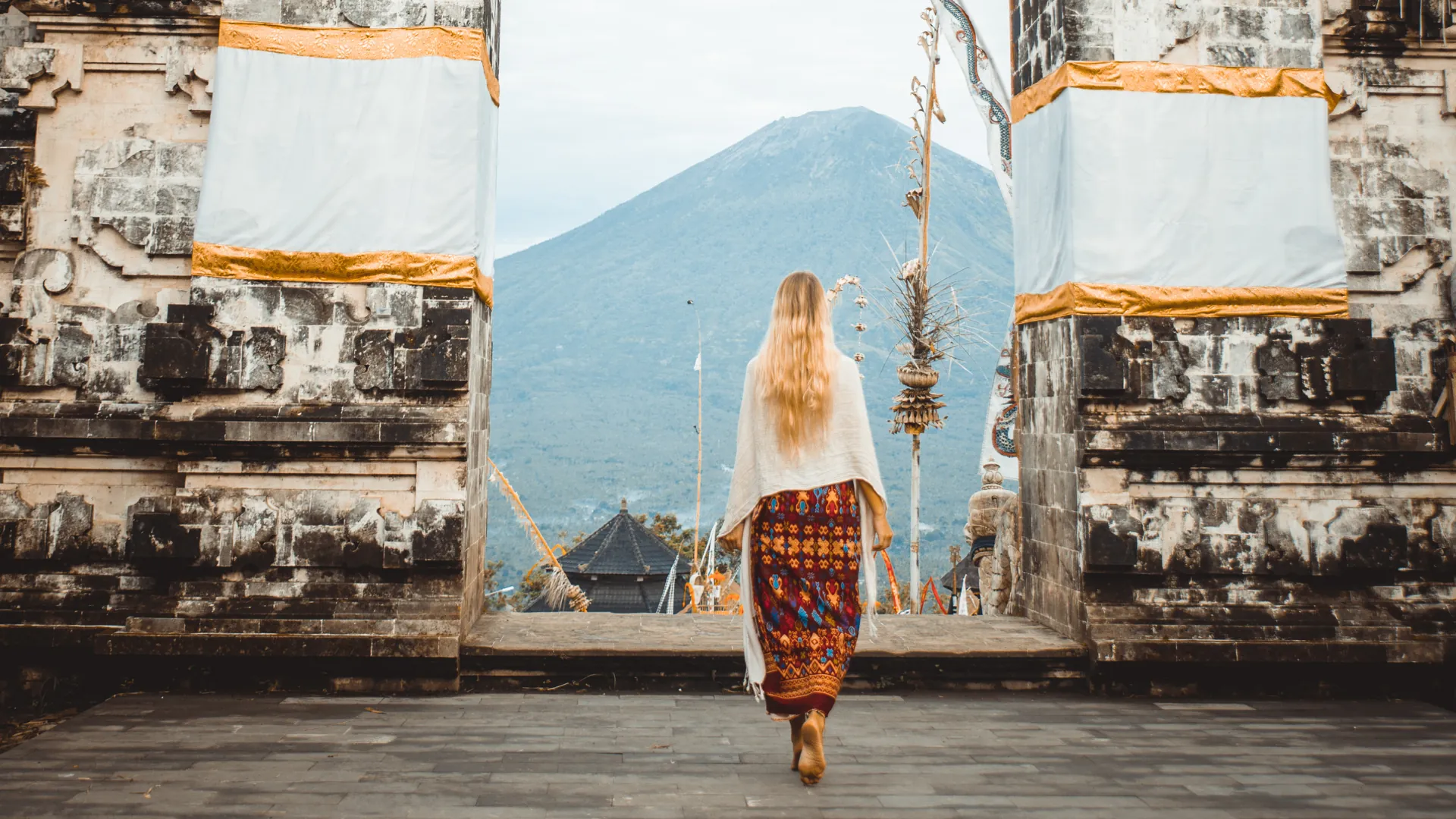
Why Respecting Etiquette Matters
You might ask: “Is all this really necessary?” Yes! And here’s why. For the Balinese people, these temples aren’t just historical sites, they’re active places of worship deeply integrated into daily life. Their customs are not tourist theatre but meaningful spiritual practice. When visitors glibly ignore basic rules (bare shoulders, shoes in courtyards, loud phone calls), it can disrupt the balance between visitor and locals. You feel a small shift: the sacred becomes a spectacle. Following etiquette isn’t about guilt, it’s about connection. I found that by dressing respectfully, walking quietly, and paying attention, my experience flowed more easily and felt richer.
Travel Tip and Events
In 2026, mark your calendar for festivals and calendar-days like Tumpek Krulut (March 26, 2026) and Purnama Kedasa (April 2, 2026), when many temples have extra offerings and rituals. At busy times like full-moon ceremonies at Besakih, you’ll find more spiritual energy and more visitors, so go early, stay patient, dress carefully, and maybe steer clear of big tour groups. Because you’ll rely on mobile maps and communication in remote areas (east Bali, temple slopes), having an eSIM like ORA eSIM means you’re online instantly.
Indonesia
When you’re hopping between temples, jungle cafés, and remote drivers in Balinese interior roads, connectivity isn’t just a convenience, it’s peace of mind. With ORA eSIM, you can have your data set up before you land, no physical SIM swap, and you’re online from the moment you step off the plane. That means you can verify temple opening hours, check etiquette reminders, book a driver to Besakih, pull up language translations or map your route, all while respecting the tradition and not being distracted by connection issues. Because I treated the temple as a place of worship rather than a photo-spot, I felt welcomed rather than obtrusive.
FAQs
Do I absolutely have to wear a sarong and sash when visiting a temple in Bali?
Yes! In many of the major temples (like Tirta Empul and Besakih) wearing a sarong and sash is required as part of the dress code, and many temples provide them at the entrance.
Can I participate in the purification ritual at Tirta Empul if I’m not Hindu?
Yes, visitors of any faith can participate, but only with the proper attire (wet-sarong for the pool, dry sarong afterward) and with respectful behaviour.
Are women on their period allowed in the temple or water pools?
Traditional Balinese custom asks that menstruating women refrain from entering certain inner temple areas or purification pools.
What happens if I ignore the rules (e.g., wear shorts or bare shoulders)?
You might be refused entry, asked to leave, or asked to rent a sarong/sash. One tourist was ejected for ignoring the rules at Besakih.
When is the best time to visit, should I go during a ceremony or avoid it?
Both have pros and cons. A major ceremony offers deep cultural immersion, but also larger crowds and some restricted access. Arriving early on a quiet day gives more space for reflection. When visiting during 2026 events like Tumpek Krulut (March 26) or Purnama Kedasa (April 2) you’ll see extra rituals.
Do I need mobile data or phone service when visiting remote temple sites?
It’s highly recommended to look up local info, navigation, and emergency contacts. Getting a data eSIM like ORA eSIM means you’re covered without messy local SIMs or roaming costs.