
When I set foot in Bali, I thought I was only coming for the beaches and rice terraces. But what stayed with me was the Balinese culture colorful ceremonies, daily offerings, the rhythm of gamelan music, and the kindness of locals. The deeper I went, the more I realized that true Bali lives in its traditions. If you’re planning your trip, here are cultural experiences in Bali every visitor should try. Whether it’s a traditional Balinese dance performance, a cooking class, or joining a village ceremony. These are the moments that transform a vacation into a journey.
Best Traditional Dance Performances in Bali
One of the most captivating introductions to Balinese culture is through its dances. A traditional Balinese dance is not just performance art. It’s a spiritual expression rooted in centuries of storytelling.
Some must-sees include:
- Kecak Dance at Uluwatu Temple – famous for its dramatic chants at sunset.
- Legong Dance at Ubud Palace – a graceful dance showcasing intricate movements.
- Barong Dance in Batubulan – symbolizing the eternal battle of good and evil.
Book ahead online to secure seats, especially at cultural hotspots like Ubud.
Visiting Local Balinese Villages
Villages such as Penglipuran and Tenganan preserve customs and ways of life that have existed for generations. Walking through cobblestone paths, watching farmers in the fields, or meeting artisans in their workshops offers a close-up look at how Balinese families live in harmony with tradition. Opt for community-led tours to ensure your visit supports local livelihoods.
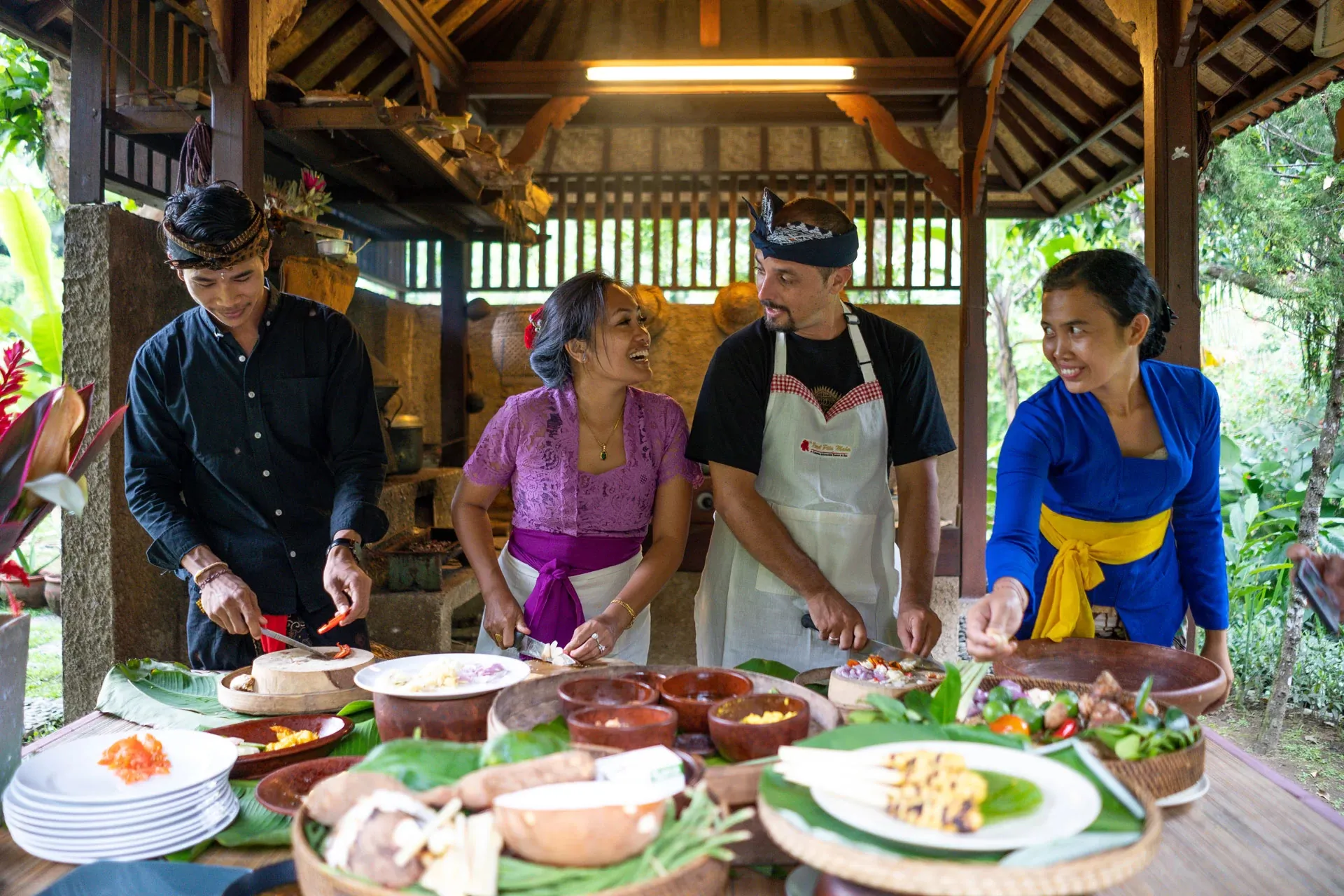
Balinese Cooking Class
Photo from Royal Pita Maha
Cooking Classes for Authentic Balinese Food
One of my favorite experiences was joining cooking classes in Bali, where I learned to make sate lilit and ayam betutu. These classes often start with a local market tour, letting you discover Balinese spices, herbs, and cooking techniques. Not only do you enjoy a delicious meal, but you also carry a piece of Balinese culture home with you. Ubud and Seminyak host some of the island’s most popular cooking schools.
Balinese Temple Etiquette for Tourists
Temples are sacred spaces, and understanding local etiquette is key. Wearing a sarong, respecting offerings, and moving quietly helps maintain the balance between visitors and worshippers. Temples like Tirta Empul (holy water temple) and Besakih (Mother Temple) offer powerful insights into the spiritual role of religion in Balinese daily life.
Traditional Balinese Crafts Workshops
Another immersive way to connect with locals is through a Balinese crafts workshop. You can try wood carving in Mas Village, silver jewelry making in Celuk, or batik painting in Ubud. These workshops keep ancient traditions alive and allow you to create something meaningful with your own hands. Many workshops offer half-day or full-day classes, perfect for travelers seeking authentic experiences.
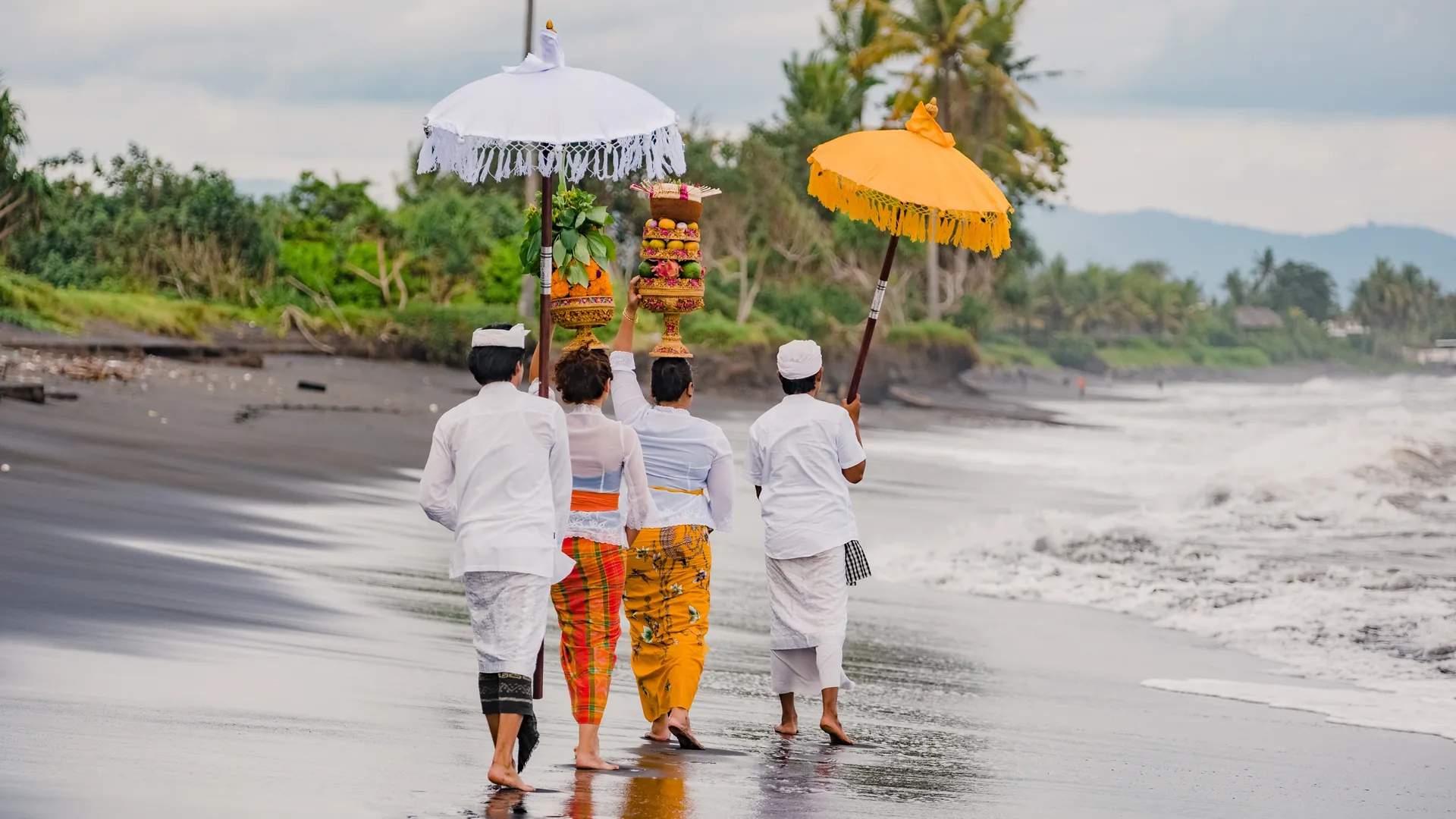
Nyepi Ceremony
Attending a Balinese Ceremony as a Visitor
Ceremonies are at the heart of Balinese culture. If you’re fortunate to attend one, you’ll witness a blend of devotion, art, and community spirit. From full moon temple ceremonies to the island-wide Nyepi (Day of Silence), these experiences leave lasting impressions.
Learning the Balinese Language Basics
Learning even a few words of the Balinese language like Suksma (thank you) or Om Swastiastu (a respectful greeting) deepens connections. Locals always appreciate when visitors make the effort.
Museums and Cultural Centers in Bali
For travelers wanting to understand the cultural depth of Bali, museums like Neka Art Museum, ARMA, and the Bali Museum are excellent. These centers preserve not just art but also the philosophies that underpin Balinese traditions.
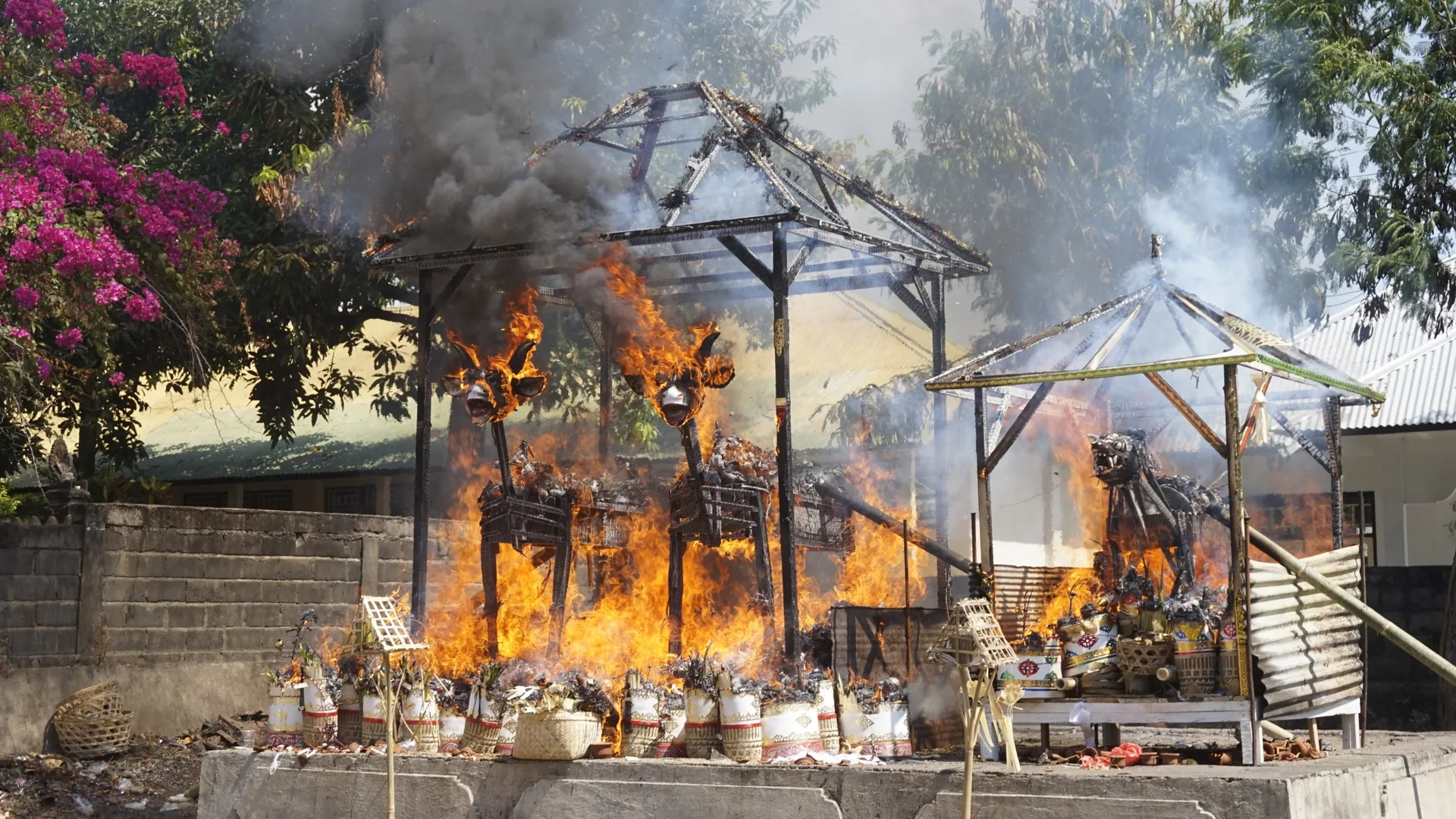
Ngaben
The Role of Religion in Balinese Culture
Religion in Bali is lived daily, from morning offerings to elaborate ceremonies. Balinese Hinduism shapes the island’s identity, blending ritual, art, and community. To experience Bali fully, you must see how spirituality infuses everyday life.
How to Experience Authentic Bali Beyond Tourism
If you want to avoid the surface-level tourist trail, choose homestays, explore Sidemen or Munduk, join local tours, and eat at family-owned warungs. The heart of Bali is found when you slow down and live as the locals do.
My most unforgettable memory wasn’t on a postcard-perfect beach, it was sitting in a family courtyard in Ubud after a ceremony, sharing food and laughter. That’s when I understood that Balinese culture isn’t something you simply observe. It’s something you live. When you visit Bali, immerse yourself. Take a cooking class in Bali, watch a traditional Balinese dance, join a Balinese crafts workshop, and respect the traditions that shape this magical island.
Ready to explore Bali’s culture beyond the usual tourist spots? Start planning your trip with ORA eSIM for travel eSIMs, itineraries, and insider guides that help you stay connected while discovering the real Bali.
FAQ
What’s the best way to see traditional Balinese dance?
Visit Ubud Palace or Uluwatu Temple for nightly performances.
Are cooking classes in Bali suitable for beginners?
Yes, they are designed for all levels, with easy step-by-step guidance.
Where can I try a Balinese crafts workshop?
Ubud, Celuk, and Mas Village are the main centers for workshops in wood, silver, and batik.
Can tourists attend Balinese ceremonies?
Yes, some are open to visitors. Always dress respectfully and follow local guidance.
How can I experience authentic Bali beyond tourism?
Stay in villages, eat at local warungs, and choose tours led by Balinese hosts.