
In the lush highlands and rice-terrace valleys of Bali, true change is often quietly rooted in the daily lives of local communities. Villages like Penglipuran and Sidemen aren’t just picturesque destinations—they’re living models of innovation, where tradition meets regeneration, and culture harmonises with ecology.
At the heart of this transformation lies the Balinese philosophy of Tri Hita Karana (“three causes of well-being”: harmony with God, humans and nature). It informs how communities manage the land, water, waste and social systems in a way that is deeply mindful, yet forward-looking.
Here’s how eco-innovation is taking root on the island—and how it might inspire your own projects.
Balancing People, Nature & Spirit: Tri Hita Karana in Action
The principle of Tri Hita Karana isn’t just a phrase, it’s a framework that guides real-world practice. One recent study found that MSMEs (micro, small and medium enterprises) in Bali who embed THK values report more sustainable operations and stronger community bonds.
In villages:
- Pawongan (people-to-people) means strong mutual cooperation in community work.
- Palemahan (people-to-environment) means conscious management of land, forests, and waste.
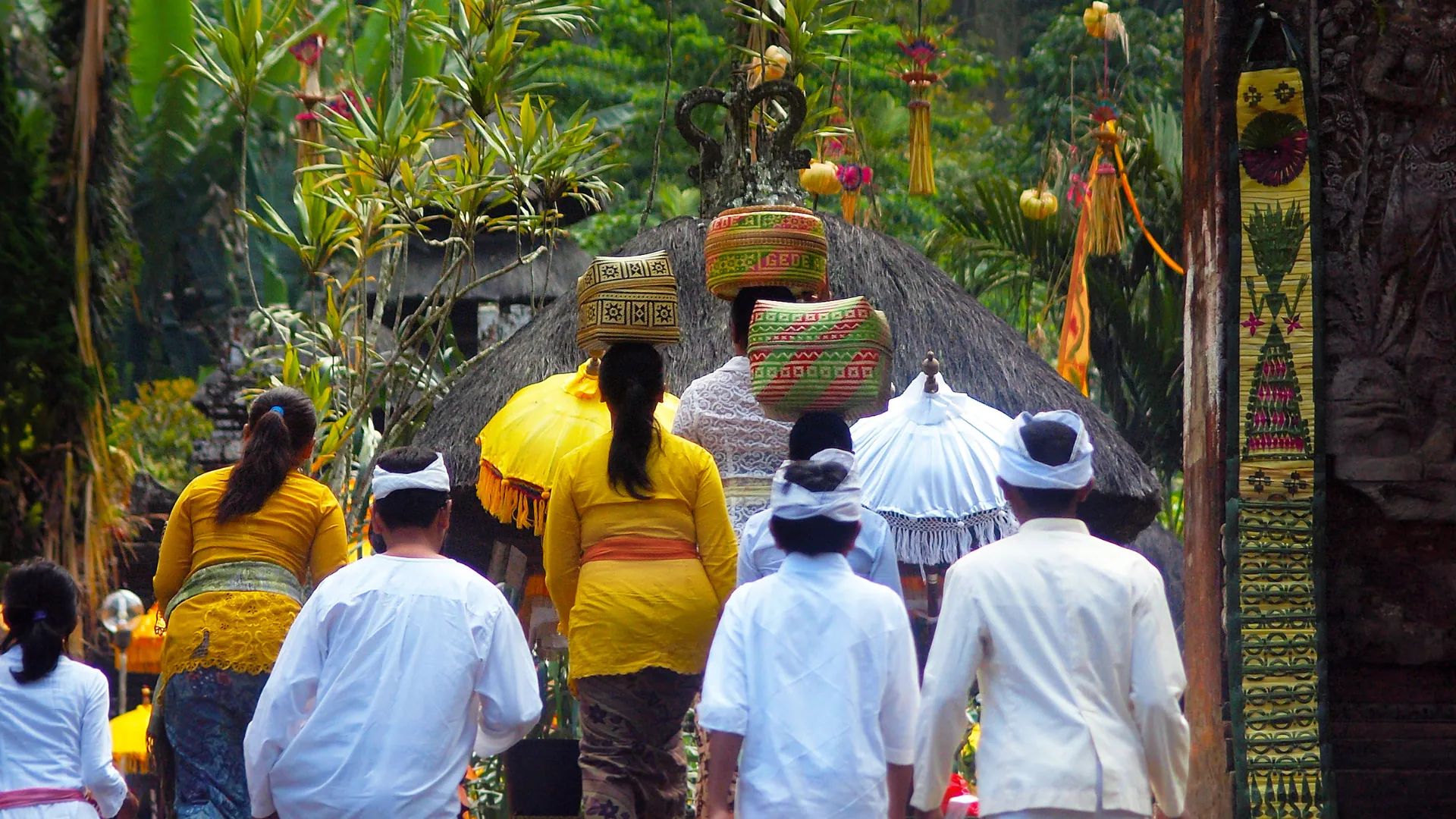
- Parahyangan (people-to-spirit) means the recognition of sacred connection, rituals, offerings, respect.
By weaving these together, villages are not only protecting the environment but also preserving cultural identity—and creating sustainable livelihoods in the process.
Penglipuran Village – Bamboo, Clean Streets & Shared Economy
Nestled in the highlands of Bangli Regency, Penglipuran is often cited as a model for sustainable tourism and community-based eco-innovation.
What they’re doing:
- The village is surrounded by a 45-hectare bamboo forest which functions as a protective green belt and water catchment.
- The community practices waste management and zero-waste ambitions: composting organic materials, regulating plastics, collective cleanliness routines.
- Tourism is run as a village-owned enterprise: proceeds support infrastructure, training, and shared benefits rather than external investors only.
- Every home participates in rotation for tourist visits so that benefit is spread equitably.
Why it matters:
Penglipuran demonstrates that eco-innovation doesn’t mean imported tech or outside specialists alone, it begins with local governance, shared values and community systems adapting to sustainability. The combination of cultural preservation and ecological practice is powerful.
Sidemen – Organic Farming, Permaculture & Slow Travel
In the tranquil valley of Sidemen, the rhythm is slower, but the change is meaningful. Here, farming, tradition and sustainability weave together.
- Local farms operate on organic and permaculture-principles. For example, at a farm-and-café in Sidemen, nearly all waste is composted and returned to the land to grow produce used onsite.
- Tourists are offered immersive “farm-to-table” experiences: walking through organic gardens, participating in harvests, learning about traditional methods.
- The slower pace of life allows for deeper connection with local culture, offering a counterbalance to fast-paced resort tourism.
Why it matters:
The Sidemen model shows how agriculture + tourism + local identity can create sustainable livelihoods without sacrificing authenticity. It’s a valuable template for eco-innovation that is grounded in place.
Collaboration: NGOs, Micro-Grants & Tourism Operators
These village efforts do not exist in isolation, they are bolstered by partnerships:
- Organisations like Tri Hita Karana Bali (the NGO) provide training in regenerative agriculture, waste management and community resilience.
- Companies and public-sector entities invest in infrastructure, marketing, micro-grants and capacity building (e.g., tourism infrastructure in Penglipuran via a state-owned enterprise).
- Tourism operators collaborate with villages to create experiences that are culturally respectful and ecologically conscious.
This network of community-led innovation + external support creates a scalable ecosystem of change.
If you’re looking to replicate or support eco-innovation in a different context (or even within Bali), these are the key takeaways:
- Start with local values: Embedding your initiative in existing cultural frameworks (like Tri Hita Karana) builds authenticity and durability.
- Ensure community ownership: Projects succeed when locals are decision-makers and beneficiaries, not just service providers.
- Blend economy + ecology: Eco-innovation must create livelihoods, not just conservation. The two can go hand-in-hand.
- Use low-tech solutions too: Composting, bamboo forests, community rules, aren’t glamorous but can be deeply effective.
- Partner smartly: NGOs, tourism partners, government, each have a role, but the local community remains the centre.
- Tell the story: These villages are attractive because the story of culture + nature + innovation resonates. That matters for awareness, funding and tourism.
In Bali, you’ll often hear that the land, the water and the spirits are all connected. In villages like Penglipuran and Sidemen, that connection is lived. Eco-innovation isn’t just about “saving the planet”, it’s about preserving identity, creating futures, and all of this flowing from the roots of community.
If you’re building a project whether in Bali or beyond consider this: success might not always come from flashy tech or large-scale investment. Sometimes, it comes from daily rituals, bamboo forests, waste bins that are colour-coded, and neighbours deciding together to protect their water source.
And that is the real power of eco-innovation.