
There’s something magical about arriving in Bali and realising that the real adventure begins at your plate. As soon as you land, you’re ready to explore this island not just through its beaches or temples, but its flavours.
While I wandered the streets of Ubud, Denpasar, and down to Seminyak in 2025, I discovered ten dishes that honestly made me fall in love with Balinese cuisine. Let me take you on that journey, from crispy skin to coconut salads, with the added bonus of how staying connected via ORA eSIM helped me find hidden spots, translate menus, and snap foodie-shots to share.
Babi Guling – The Ultimate Balinese Feast
If you only try one Balinese dish, make it Babi Guling, the legendary roast suckling pig. I found a warung in Ubud, thanks Google Maps via my ORA eSIM called Warung Babi Guling Ibu Oka (Anthony Bourdain once called it one of Bali’s best eats) tucked down an alley behind the main street and watched the chef carve fresh slices as they came out of the wood-fired oven. The skin? Almost like brittle caramel. The meat? Succulent and aromatic with turmeric and local herbs. Do yourself a favour: ask for the extra crispy bits and a side of sambal matah (fresh chilli-shallot relish).
Lawar – A Flavorful Local Tradition
This one’s more local-everyday but packs big flavour. Lawar is a mix of minced meat (sometimes pork, sometimes chicken), fresh coconut, chopped vegetables, and fragrant herbs and spices. Locals swear by Warung Men Weti in Sanur, famous for its Lawar Ayam (chicken lawar) and eat it the way locals do, with rice, sambal, and a view of the ocean breeze.
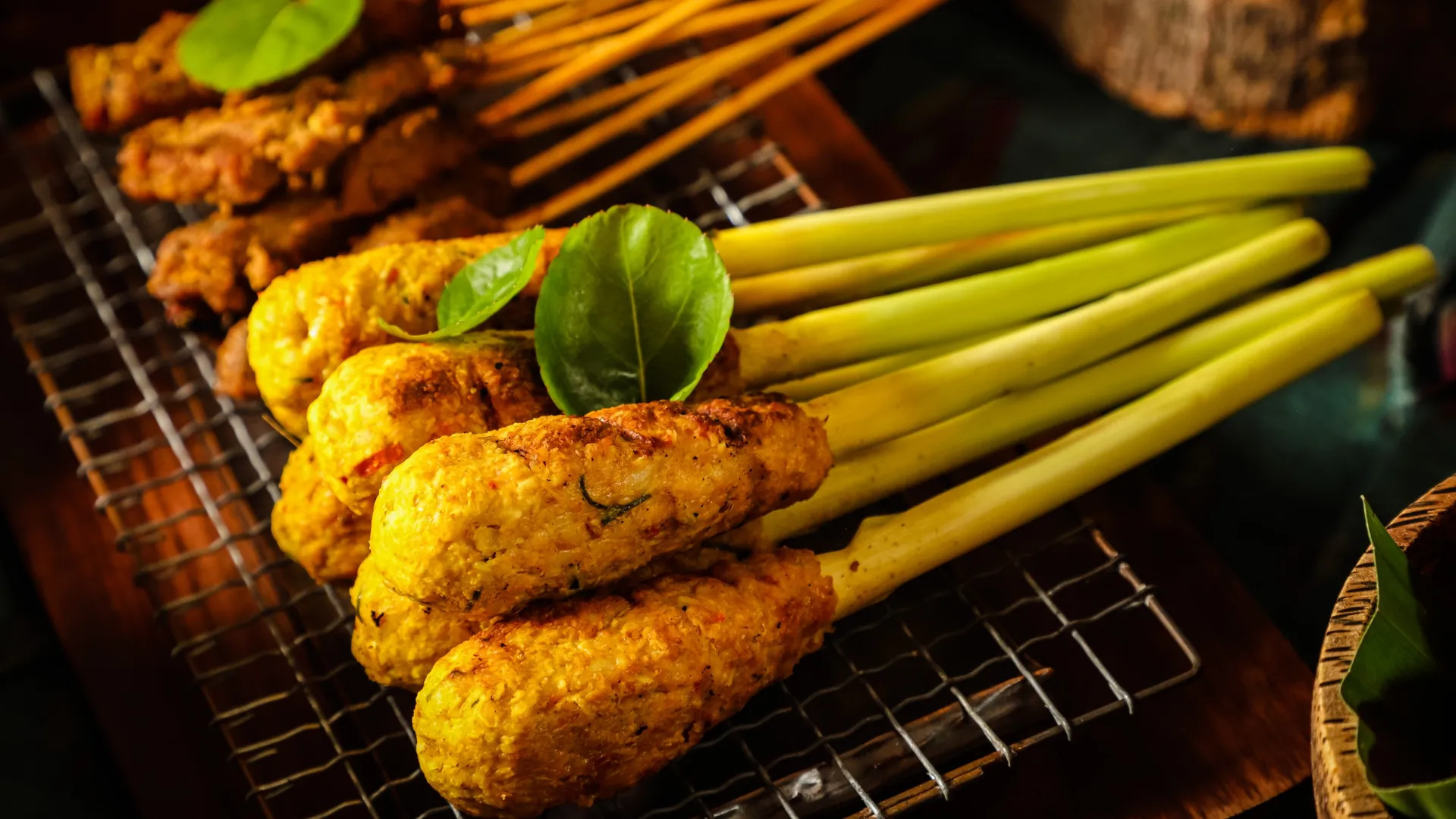
Sate Lilit
Sate Lilit (Minced Meat on Lemongrass Sticks)
Forget ordinary satay! Sate Lilit takes minced meat, often fish or chicken, mixed with grated coconut, spices, wrapped around a lemongrass stalk and grilled. One evening I wandered the night-market in Denpasar and spotted a stall where the grill hissed and the aroma pulled me in. I picked up two skewers, ate standing, watched locals chat, smoked, and swapped stories. The lemongrass handle released flavour and fragrance as you ate.
Nasi Campur (Mixed Rice Plate)
When you can’t decide what to eat, Nasi Campur is always the perfect choice. Meaning “mixed rice,” it comes with steamed rice and a variety of small side dishes, meat, fish, or vegetarian options, along with vegetables, sambal, and crackers. It’s the ideal introduction to Balinese cuisine, offering a little taste of everything on one plate. I tried it at Warung Pojok in Denpasar, following a local recommendation. Their version came with a touch of sambal, mixed vegetables, assorted meats, and crispy crackers. Light, flavorful, and just right for lunch without feeling too full for dinner.
Sayur Urab – Fresh and Vegetarian-Friendly
Vegetarian-friendly and so refreshing. Sayur Urab is chopped vegetables (long beans, spinach, bean-sprouts, maybe tofu) mixed with fresh grated coconut, chilli, lime, and herbs. I found it at a vegan/vegetarian café called Oma Jamu in Canggu, they serve a beautifully plated version that health-conscious travelers love. The bright coconut flavour with chilli and herbs made it unlike any standard salad I’d tried elsewhere. If you’re looking for lighter dishes or balancing the meaty ones, this is your go-to.
Nasi Jinggo (Banana-Leaf Rice Pack Snack)
Hungry on the go? Nasi Jinggo is small but mighty, comes in a banana leaf pack filled with rice, spicy chicken, tempeh, noodles, and sambal. Find it late at night from roadside stalls in Kuta or Seminyak, it’s the perfect midnight snack after a night out. These small parcels of joy are best enjoyed on the go.
Bebek Betutu – Slow-Cooked Perfection
Imagine duck marinated in a potent blend of shallots, garlic, turmeric, ginger, galangal, then wrapped in banana leaves and slow-cooked until the meat is falling off the bone. I enjoy this rich dish at Bebek Bengil (Dirty Duck Diner) in Ubud, where the lush garden setting enhances every bite. The aroma when they uncovered the banana leaves was pure theatre. This dish takes hours, so go somewhere reputable (ask the locals).
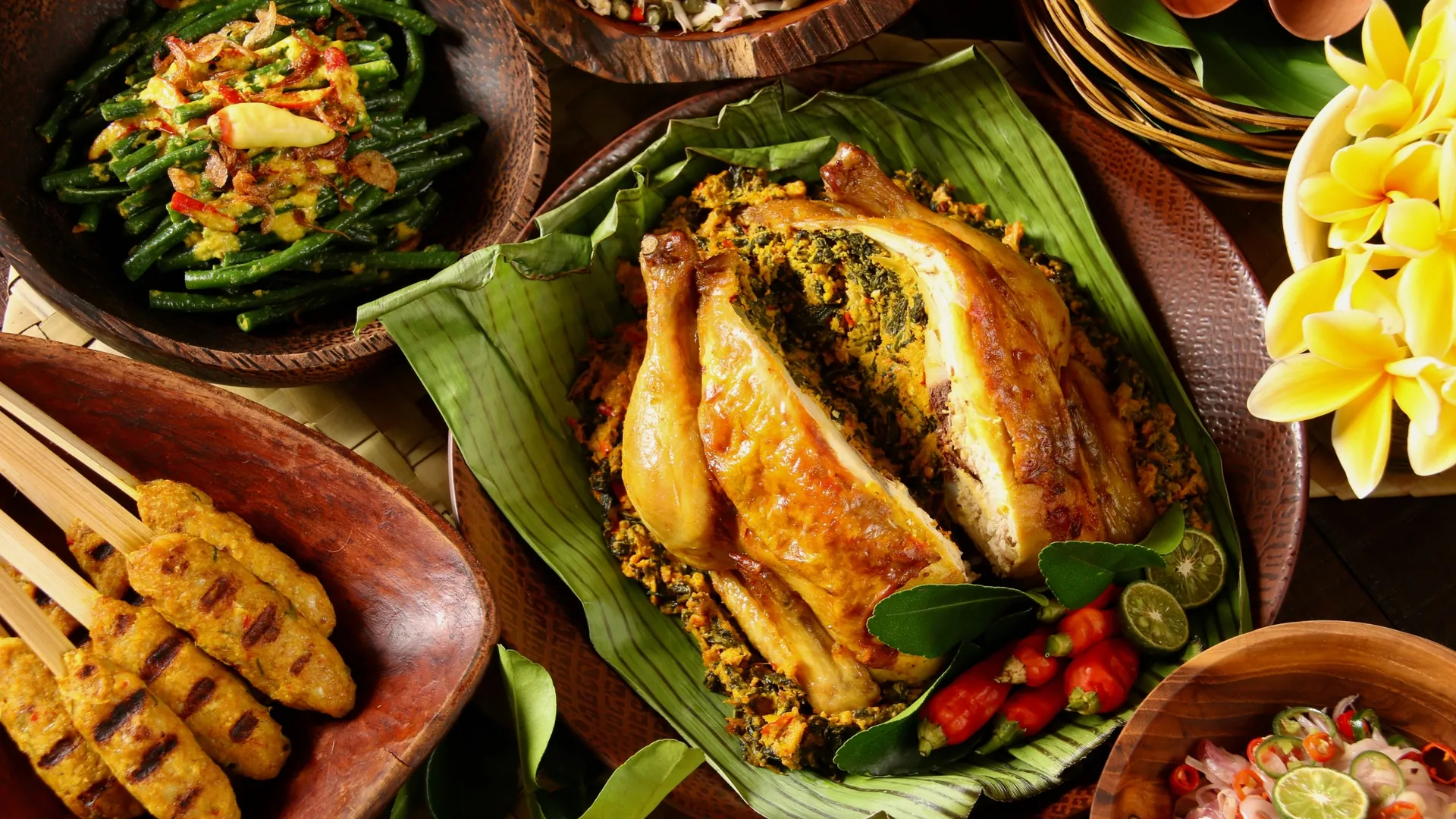
Ayam Betutu
Ayam Betutu – A Spicy, Hearty Favorite
If you love Bebek Betutu but prefer chicken, Ayam Betutu will steal your heart. Same technique with marinade, spices, banana leaf wrap, but lighter on the meat. The best spot? Ayam Betutu Liku in Denpasar, a local legend that’s been serving the same family recipe for decades. I peeked at reviews and found this hidden gem with ‘locals only’ vibes. The chicken was moist, not too heavy, and the spice blend lingered pleasantly. Be warned! It sells out fast, especially during lunch hours!
Tum Ayam (Minced Chicken Steamed in Banana Leaves)
Another slightly off-beat gem. Tum Ayam is one of Bali’s most underrated dishes. It’s made from minced chicken mixed with coconut milk, shallots, and aromatic spices, then steamed in banana leaves. The result? Soft, fragrant perfection that melts on your tongue. It’s less common on tourist menus, so you’ll feel like you’ve discovered something local and it's perfect for a morning bite.
Laklak – Sweet Ending to Your Balinese Feast
Finish your culinary adventure with Laklak, a bite-sized rice flour pancake, naturally green from pandan leaves, and topped with grated coconut and palm sugar syrup. They’re soft, slightly chewy, and addictive. I found the best Laklak at Sanur Morning Market, freshly made on charcoal griddles. Even if you normally skip dessert, make an exception for this. It’s light, delicious, and uniquely Balinese.
Exploring Bali’s food scene means moving around, from Ubud’s lush hills to Canggu’s surf cafés and Denpasar’s night markets. With ORA eSIM, you can share your food finds instantly, and navigate to hidden warungs using local data at local prices.
FAQs
Are these dishes safe for tourists?
For the most part, yes, just use the common sense precautions: make sure food is freshly cooked, drinking water is safe (or use bottled), and if you have dietary restrictions, ask what’s in the dish (some may contain pork or offal).
Where can I find vegetarian or vegan versions?
Bali is getting more vegan-friendly every year. For instance, sayur urab is naturally vegetarian. For dishes like nasi campur or lawar, just ask for the vegetarian/vegetarian-protein version.
What’s the typical price range for these dishes?
It varies widely. Street-food snacks like nasi jinggo are very affordable. Dishes at upscale restaurants (e.g., Bebek Betutu in a riverside setting) will cost more. But you’ll find excellent value in small local warungs.
Do I need to book ahead for food tours or cooking classes?
It’s a good idea! Especially during festivals like the Ubud Food Festival.
When is the best time to visit Bali for foodie experiences?
The dry season (April to October) is ideal for travel and outdoor meals. Also, align your trip with events for a foodie-boost.